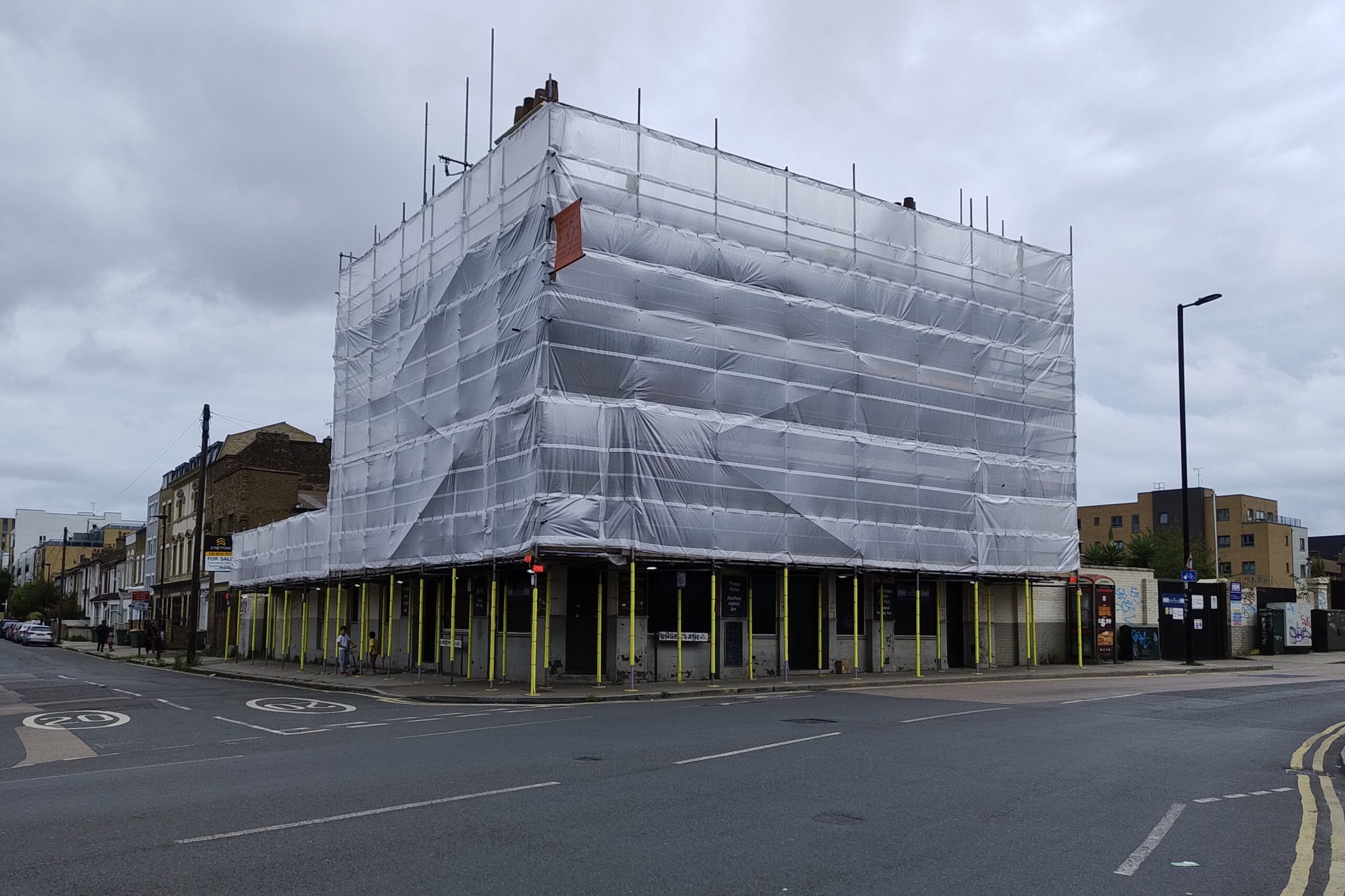
The Railway Tavern stood on Angel Lane in Stratford, near Maryland Station. In the 1960s it became one of East London’s best-known live-music pubs, with bands playing upstairs most weeks.
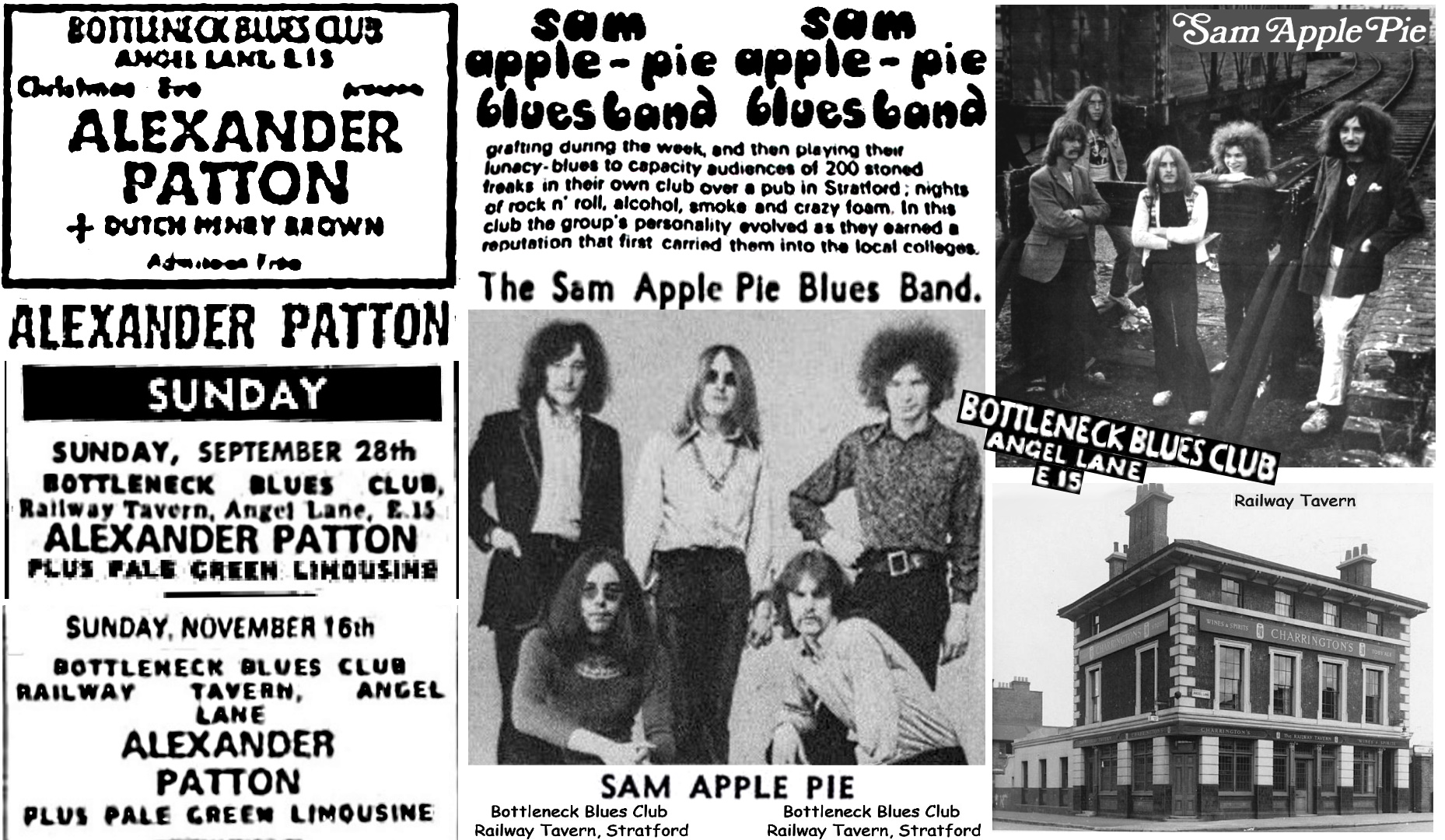
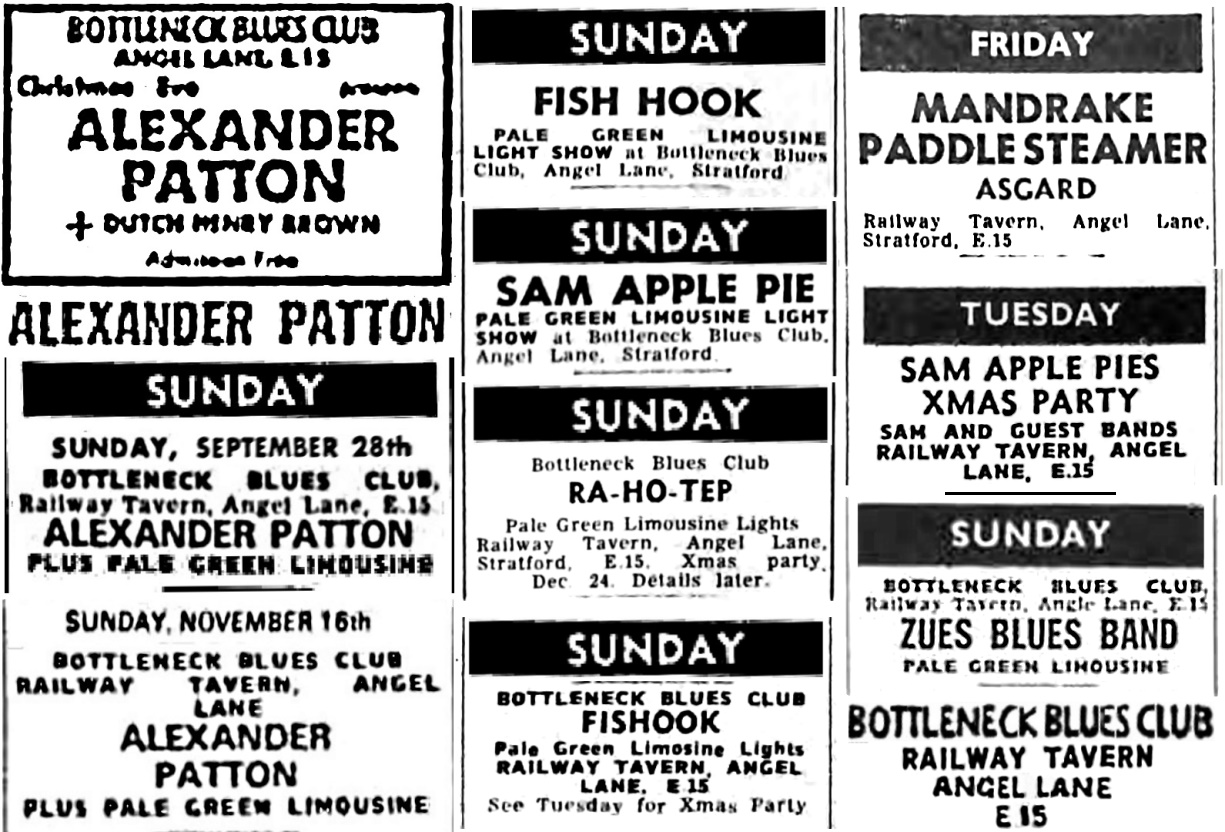
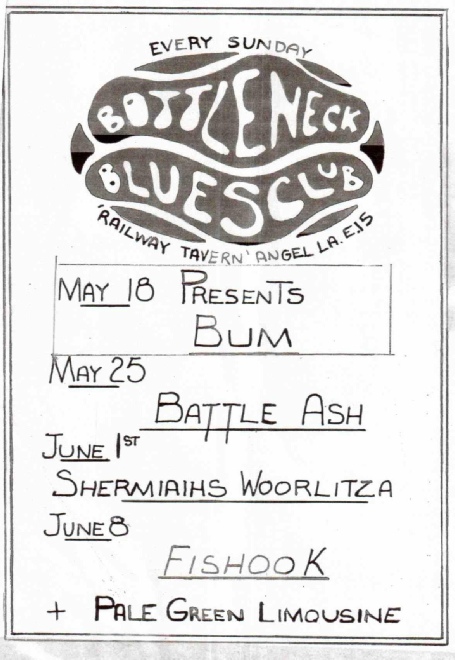
In the mid-1960s the pub was home to the Bottleneck Blues Club, known for its lively Sunday sessions. Sam Apple Pie were the resident band, joined by others including Fleetwood Mac (with Peter Green and Christine Perfect), Free, Duster Bennett, and Sutherland Brothers & Quiver. Local trio Speed Auction — who later became Incredible Hog — also played early gigs there.
“Went there more or less every week… saw many bands there — Sam Apple Pie were frequent but also the original Fleetwood Mac… all for 50p.” – Vic Scott
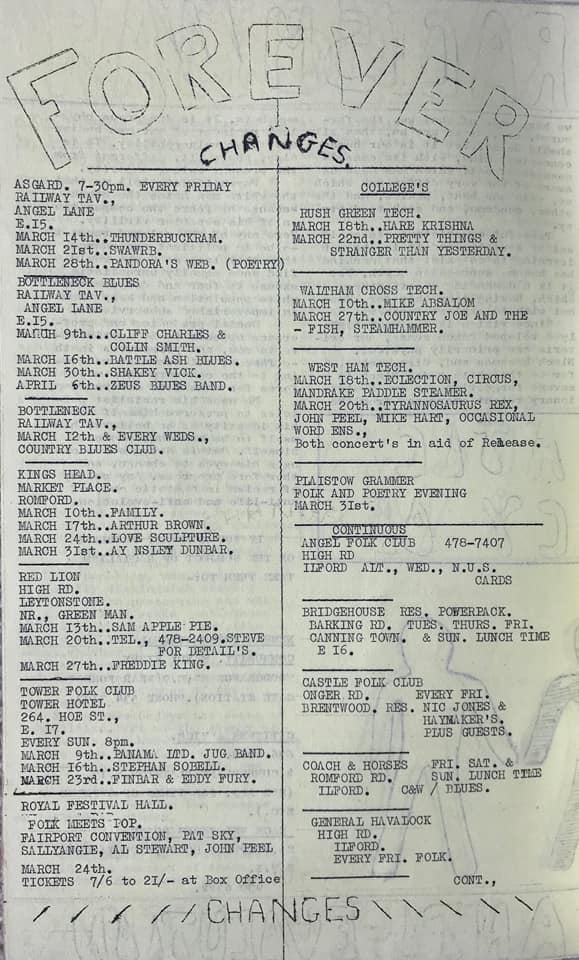
By the late 1960s, the small upstairs room became part of the emerging East London counterculture. A group of art-school friends — Tim Plant, Kevin Cockerell, Pat Kean and Paul Fenn — were involved in London’s anarchist and underground press scene. They first tried to launch an alternative magazine called LUNG, inspired by International Times and Oz. When the magazine folded, they redirected the same do-it-yourself, anti-authoritarian energy into putting on live events at the pub. They called the club Asgard.
Page from LUNG.
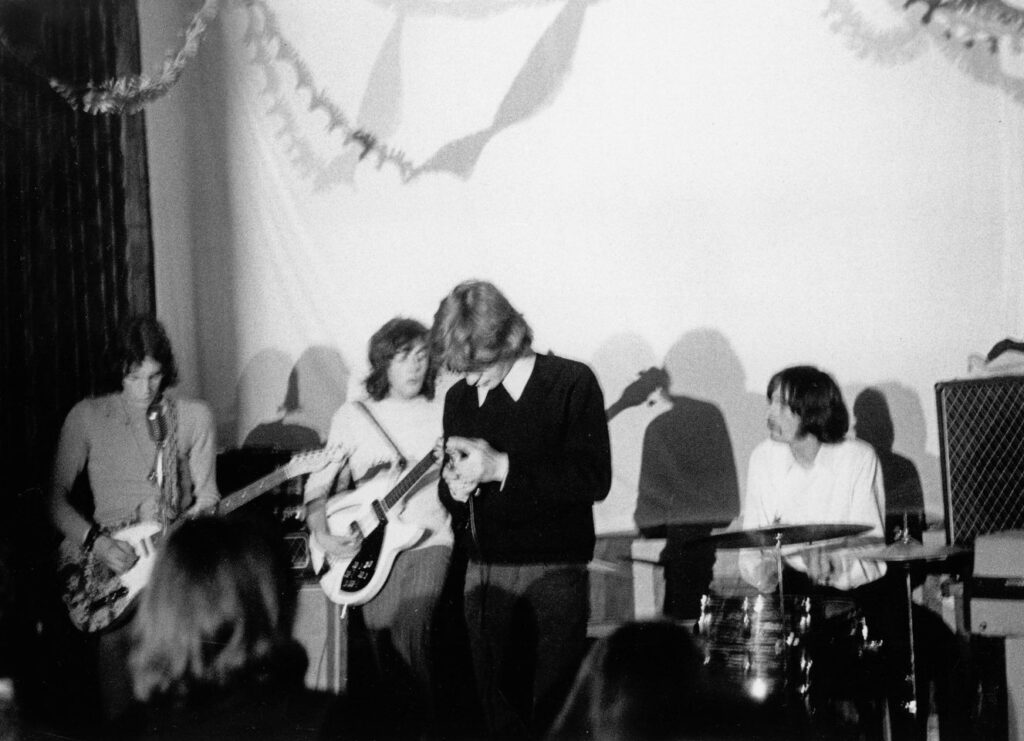
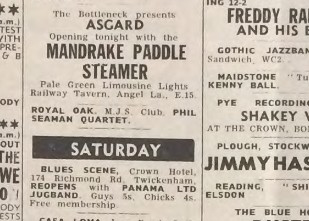
Asgard was run on anarchist principles: no hierarchy, no fixed structure, and no commercial ambition. The organisers carried equipment up the stairs, borrowed gear, and passed a hat to cover costs. Visuals were created by the Pale Green Limousine light show, who filled the room with hand-painted slides, bubbling inks and colour-wheel projections.
Mandrake Paddle Steamer with Pale Green Limousine light show at Waltham Forest Art School, c. 1968 (Photo Credit Morris Freeman via Brian Engel (Mandrake Paddle Steamer))
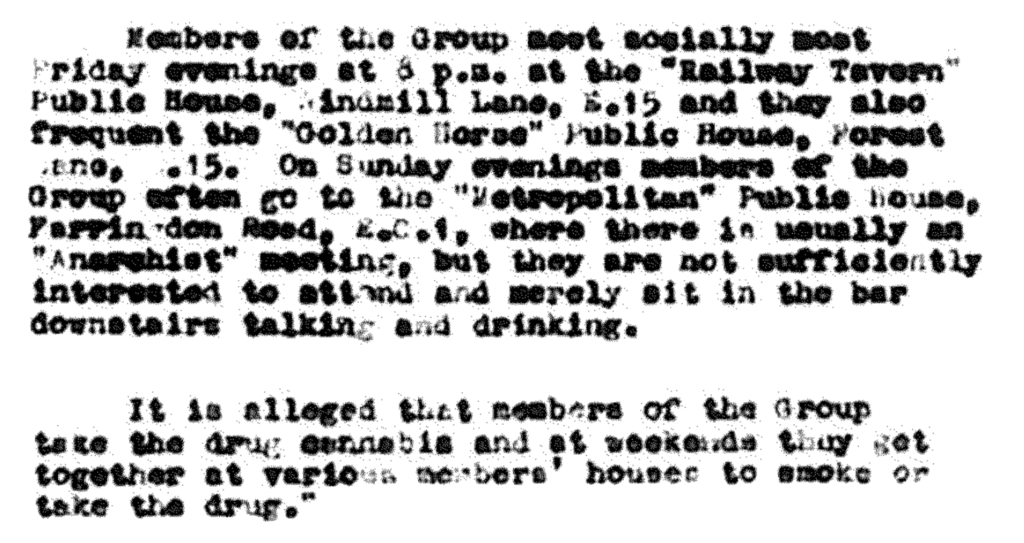
Members of the LUNG and Asgard group were also connected with the West Ham Anarchists, part of a small network of anti-war and anarchist activists in East London. Decades later, Tim Plant discovered that their meetings and events had been watched by an undercover police officer from the Special Demonstration Squad — the same “spy cops” unit now under national inquiry for its surveillance of political and protest groups.
“We didn’t know definitely at the time, but we suspected we were being observed. When the papers were released for the inquiry, it turned out we had been. The officer who was spying on us went back to his bosses and said, please can he stop looking at us because we were a complete waste of time — which wasn’t terribly flattering, but in retrospect, not inaccurate,” Tim Plant
Special Branch report on the West Ham Anarchists by undercover officer “Douglas Edwards” (HN326), 1968–69.
The nights mixed music, art and politics. Bands such as Mandrake Paddle Steamer, Third Ear Band, The Strawbs, Audience and Steamhammer played under swirling light and dense smoke, while the later Gromit Light Show added new layers of psychedelic projection. Incredible Hog, who had played earlier blues nights as Speed Auction, were part of the same East London circuit.
Mandrake Paddle Steamer, Railway Tavern Courtesy of Tim Plant
Asgard Playlist
Asgard’s combination of community, experimentation and chaos made it a formative space for many who took part. Paul Fenn went on to found the Asgard Agency, which became one of the UK’s leading live-music promoters, while Tim Plant and Kevin Cockerell continued to work in the arts and education.
From its blues beginnings to its anarchist Friday nights, the Railway Tavern captured a moment of change in Stratford — when young artists transformed a back-room pub into a space for freedom, creativity and noise.
Oral histories
Tim Plant
Play audio
Background
Tim Plant, born 1952 in Plaistow, co- founded Asgard at the Railway Tavern in Stratford, mixing music and politics as part of the 1960s counterculture.
Transcript
The people downstairs in the pub would have been, you know, basically local working class people going out for a Friday night drink. Again, never really an issue there. The Publican and his wife were fairly stern characters, and, you know, wouldn’t put up with any nonsense, and didn’t like people who were too drunk or inebriated messing the place up, and were quite capable of moving them on very easily. So never any issues there. I mean, the main problem, I suppose we had was, particularly in going home, is, you know, avoiding the local skinheads who weren’t weren’t well disposable, I was going to say weren’t well disposed to hippies. We never called ourselves hippies in those days. We always refer to ourselves as heads. So I had about an hour’s walk to get back home, which was often made longer because there were areas, particularly the Two Puddings, the big pub on Stratford Broadway was a big skinhead Hangout, and so you had to have to plan a route home which avoided those sort of areas.
Well, they’re a small group of, as I say, we’re all very young. We didn’t really know what we were doing at all, but we wanted to try and have something going on locally. There was an outfit called the sort of collective little group called Lung, which it was original ambition was try and create some sort of underground magazine at which we failed horribly, and nothing of any significance came out of that, other than the event, which was actually at the Railway Tavern and which had a local band called Speed Auction, who were, you know, a bit bit of a favourite. They were sort of very much a blues based band. So we had them there as people aspiring to be poets and performance artists, all turning up. And the landlord got a bit upset because somebody set fire to an American flag, again, a thing that happened quite regularly at demonstrations and things. And he refrained from throwing us all out, because at the end of the day, we were a good source of income for them. That when Asgard was going, we would be turning out probably best part, 100 people there every Friday.
Light shows were a big thing in those days as well. So you’d use an old school slide projector, and you fit into it a small piece of glass in which you’d put oil and coloured inks, put another piece of glass over the top, fit that inside, project it onto the wall, and then the heat from the bulb, which was quite significant, would slowly start to boil all the oil ink and ink up, and it would bubble and splatter within the glass. And that projection you’d used really quite brilliant coloured artists inks and the oil would bubble and spread all the colours round, and you get spectrum effects. And that was a an integral part of the whole experience. And.
Kevin Cockerell
Play audio
Background
Kevin Cockerell, born 1951 in Stepney, grew up in Newham and co-founded Asgard at the Railway Tavern, later running jazz and music events at local venues.
Transcript
Actually, yeah, all the pubs up around there did live bands. And there was also, from about ’66 onwards, late ’66 early ’67 in the Railway Tavern in Angel Lane, there was a blues club called a the Bottleneck Blues, and that was on a Sunday night, and a few couple years later, me and a friend started a sort of what Frank Zappa referred to as a, you know, a hippie, hippie underground sort of place at the Railway Tavern, you know, was upstairs. It wasn’t underground. And the landlord there used to claim that he always knew when I was dancing because I weighed about 20 stone, because he used to loose plaster off his ceiling. He tried to charge us for it. And that was quite good, you know, and the Bottleneck had that was a really good place to go.
Some of them had record contracts and things later on. You know, the original English Stray, rather than the American band, band called Jody Grind. We had the Strawbs one time, The Third Ear band, third year band. That was a great, actually, that was a great gig. It was in the middle of winter, and I was saying I worked at the the careers office in Stratford. It was then, and I remember looking out my window and seeing the snow start to come down. And at four o’clock, five o’clock, the snow was coming down even heavier. I thought, ‘Oh, this is going to be a nightmare’. So straight after work, round to the Railway Tavern and say, thinking, perhaps the band won’t be able to get here, you know, like us, and we can claim it as an act of God or whatever. And we- I got there, the band will all there. And I figured we’re gonna lose a packet on this, you know. And then the crowd started to arrive, you know. And I’m sure the trains must have been cancelled, but they were getting a lot of the people who came would come from- They might be going to college in Newham, but they all lived in Barking and Romford and places like that. And by the time- well, actually, I think that was we came to a deal with the band. We said, right you, ‘If you say acts of God, couldn’t get there, couldn’t do it. And we’ll, we’ll split whatever money we get with you and rebook you’. And about 120 people turned up. Was pretty much packed out the place. And it was a good evening. For all, you know, everybody had a good time, but…